TC at Home

When I wrote “TC At Work Daily,” I realize that my profession never leaves me once I step out of the office. I never stop utilizing the skills I learned while attending New Mexico Tech.

I guess this may mean that it drives my friends and family crazy that I am always reading their work and correcting it at home. Actually, the opposite happens. They ask me for help and advice whenever possible and they are happy that I’m around to share my knowledge and experience.

For example, before and after the STC 2011 Summit, I helped my mom create retirement flyers for her friends at work. She needed something nice to present to the retirees and knows that I’ve done various deliverables for a variety of projects. Most of them consisted of classwork but they still count as professional work.

The end result was compliments forwarded from my mom.

It doesn’t stop there. I also am a resource for my friends who need help with up their resumes and cover letters for job applications. One friend asked me to review his application  in order to apply for a major wireless telecommunications company. There are a number of times which my friends ask me to proofread their homework at the last minute. I made the time to review their work and make suggestions.

What I love about doing these tasks is that I continue to use my skills beyond work. I get to improve my skill while looking for the next learning or professional opportunity.
In Internet We Trust

We have been warned over and over: don’t talk to strangers, don’t trust people from the internet, use caution when sending money for items or services on the internet. What happened to most of that hype?

Thank Chris Hansen from Dateline for warning us about scammers on the internet.

This year I took a great leap of trust and met an online friend in person.  It was really cool that I could connect with someone online and later meet them in-person and it was like nothing strange or weird happened during the encounter.

First, we were told as kids to never speak to strangers. That didn’t stop me from corresponding with people I met via the internet. This year, I met an online friend in person who I had known since 2002 and been Facebook friends since 2006. Given we are both of the opposite sex, it turned out to be an awesome experience to finally meet in person. We had a few phone calls before and we had a positive feeling about meeting up . Sometimes it may not turn out that way, but it worked out because we both shared similar interests, known each other for a long time, and are nearly the same age.

There have been stories of people scammed out of thousands of dollars, presumably because of a fake internet girlfriend or banking scam which the con-artist asks for money. There are probably worse stories circulating the internet, but I won’t go into details.

Why are people so gullible and fall for these types of scams? In that same regard, why do people participate in online dating? It’s a double-edge sword that can either lead you to meet a great person or run back home to lick your wounds.

The internet has distanced regular intimate relationships with people and with the same token has brought people closer together. I would not have imagined ever visiting a person who I only corresponded through my computer. I was always in contact with my friend yet we never met in real life until this year.

There are good people out there on the internet; you just need to trust yourself and your intuition.

QR Codes: more than fancy barcodes

At the STC 2011 Summit, there was some hype about QR Codes. What is a QR Code? What are they used for? Why?

A QR Code (short for Quick Response) is similar to a standard-looking barcode that contains data which can be read using a smart phone or QR code scanner. The data can contain information such as a URL, email address, contact information, etc.

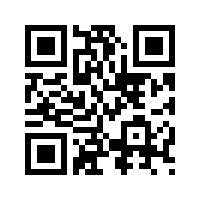
QR Code for WriteTechie.com

QR Code for WriteTechie.com

QR codes can be used to embed information on products, car parts, business cards, and airline boarding passes. For more details about QR codes, read “Barcodes: connecting the real-world to the virtual.”

I got into the act by buying a TweetUp badge this year from Robert Armstrong. That TweetUp badge only had a link to my Twitter account, yet at the STC 2011 Summit, people with smartphones and free QR reader apps could access the cryptic barcode and open up my Twitter page on their browser.

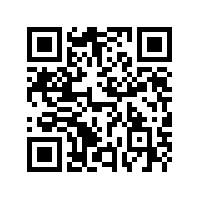
QR Code for Roger's Twitter URL

QR Code for Roger’s Twitter URL : http://www.twitter.com/torridence/

Besides putting codes on badges and novelty items, there is some practical uses. For example, Southwest and FedEx use similar barcode technology for their systems. That barcode contains the data printed on the boarding pass or shipping label. In addition, it phases out the magnetic strip that was commonly used on airline boarding passes. It makes for cheaper manufacturing and less paper waste since they are using flimsier sheets. When was the last time that you boarded a plane that had a magnetic strip boarding passes?

Southwest Boarding Pass

Southwest Boarding Pass

There are many other uses for QR Code technology and I hope it finds its way into everyday use where a TCer can simply put a QR code on a product or paper document and have a user scan it in to access supplemental information online on their mobile device. I can see an excellent use for QR codes on food products, where a shopper can scan the item and find recipes to make dinner. There still would be a technical communicator on the other side of the equation ensuring that the information is consistent and pertinent for the consumer.